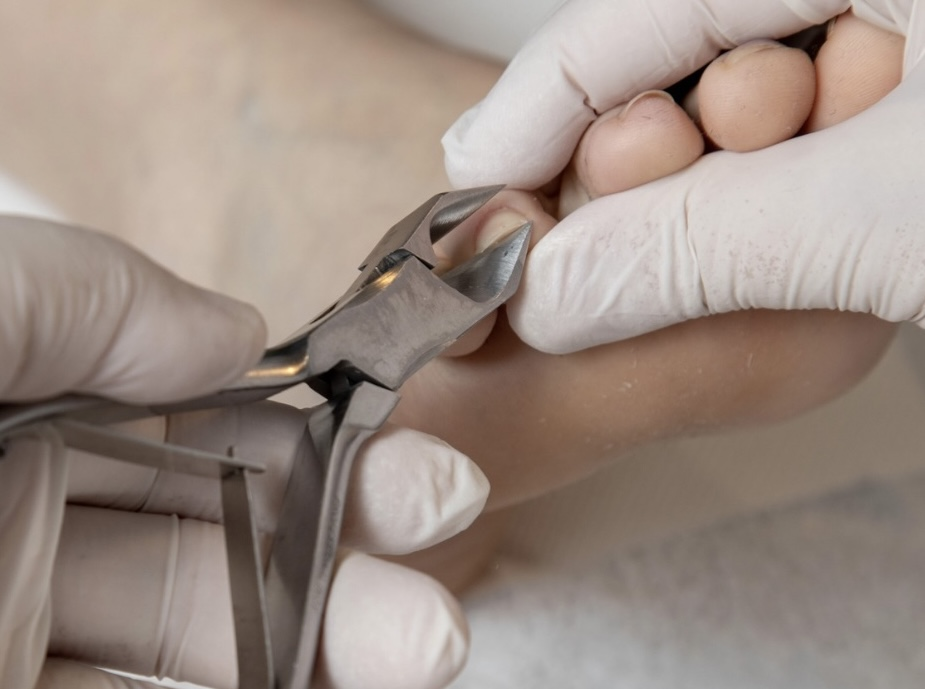
Medical pedicure is not just about making feet look good, but primarily about resolving issues that cause pain, discomfort or risk of infection. It is used for ingrown nails, fungal changes, cracks, corns, calluses and other changes that require professional, safe and precise treatment.
Unlike a classic pedicure, medical pedicure also treats damaged, sensitive or pathologically changed feet. It is particularly important for people with diabetes, poor circulation, foot deformities or chronic problems, where improper home care can worsen the condition.
Ingrown Nail – A Small Problem That Quickly Becomes a Big One
An ingrown nail occurs when the edge of the nail cuts into the nail groove and starts to press on or even pierce the skin. It most commonly affects the big toe and causes pain, redness, swelling, and in more severe cases, also discharge, granulation or infection.
Common causes include improper nail trimming, tight footwear, sweaty feet, mechanical stress and certain anatomical peculiarities of the nail or foot. Professional treatment may include removing the interfering edge of the nail, relieving the nail groove, proper nail shaping and advice regarding footwear and further prevention.
It is important not to try to solve an ingrown nail by performing deep home cuts into the edges, as this often leads to even worse ingrowth. In case of signs of infection, diabetes, poor circulation or persistent pain, professional treatment is recommended as soon as possible.

Fungal Nails – Why Treatment Requires Time
Fungal changes of the nails often appear as a yellowish, greyish or discoloured nail that thickens, deforms or starts to detach from the bed. The problem is not just aesthetic, as such a nail often causes pressure in footwear, builds up keratin under the nail and increases the risk of further spread of the condition.
In medical pedicure, the fungus-affected nail is professionally thinned, shortened and mechanically processed, which improves appearance and allows better access to topical preparations. In certain protocols, a diode or low-level laser approach can also be included as a supporting method, but success is generally greatest with a combination of regular check-ups, local therapy and consistent home hygiene.
Because the nail on the big toe grows very slowly, a complete restoration to a healthy appearance can also take 12 to 18 months. This is why patience, regular check-up visits and consistent home routine are key with fungal nails.
Cracks – Cracks That Should Not Be Underestimated
Cracks are fissures in the thickened, dry skin of the feet, most commonly on the heels. They start as rough, hard skin, then deepen into painful cracks under pressure from walking and dryness, which can burn, bleed or make walking difficult.
Medical pedicure for cracks involves phased, careful removal of the layers of hardened skin and gradual healing of the fissures, as a gentle and thoughtful approach is needed for deeper cracks. The goal is not just to smooth the heel, but to reduce pressure, support healing and prevent the cracks from reopening.
With very dry skin, success is always also dependent on home care. Without regular moisturising and protection, cracks often return.

APIS Apispodo and APIS PODO Intense
After classic care and for milder forms of dry skin, APIS Apispodo is an excellent choice, which softens, moisturises and helps maintain good results between visits. Such care is ideal for daily routine for normally to moderately dry skin on the feet.
For more demanding conditions, such as severely dry heels, initial or recurring cracks, significant thickening or stressed feet, APIS PODO Intense comes to the forefront. This line is designed for more intensive regeneration, strengthening of the skin barrier and support after medical pedicure, when feet need more than just basic moisturising.
In the salon, after a medical pedicure, we can recommend a precise APIS routine according to the problem: for ingrown nails, a more protective and soothing treatment for the skin around the nail; for fungal changes, a supportive foot care while following professional guidelines; for cracks, intensive restoration with PODO Intense, so the skin remains soft, supple and less prone to new cracking.
When to Seek Immediate Care
It is sensible to seek professional help as soon as persistent pain in the nail or foot appears, signs of inflammation, discharge, a significantly thickened or changed nail, and cracks that do not heal. For people with diabetes, poor circulation or a weakened immune system, prompt treatment is especially important, as complications can develop more quickly.
Medical pedicure is therefore one of the most sensible investments in foot health. It often prevents a minor problem from becoming chronic, painful or medically more demanding.